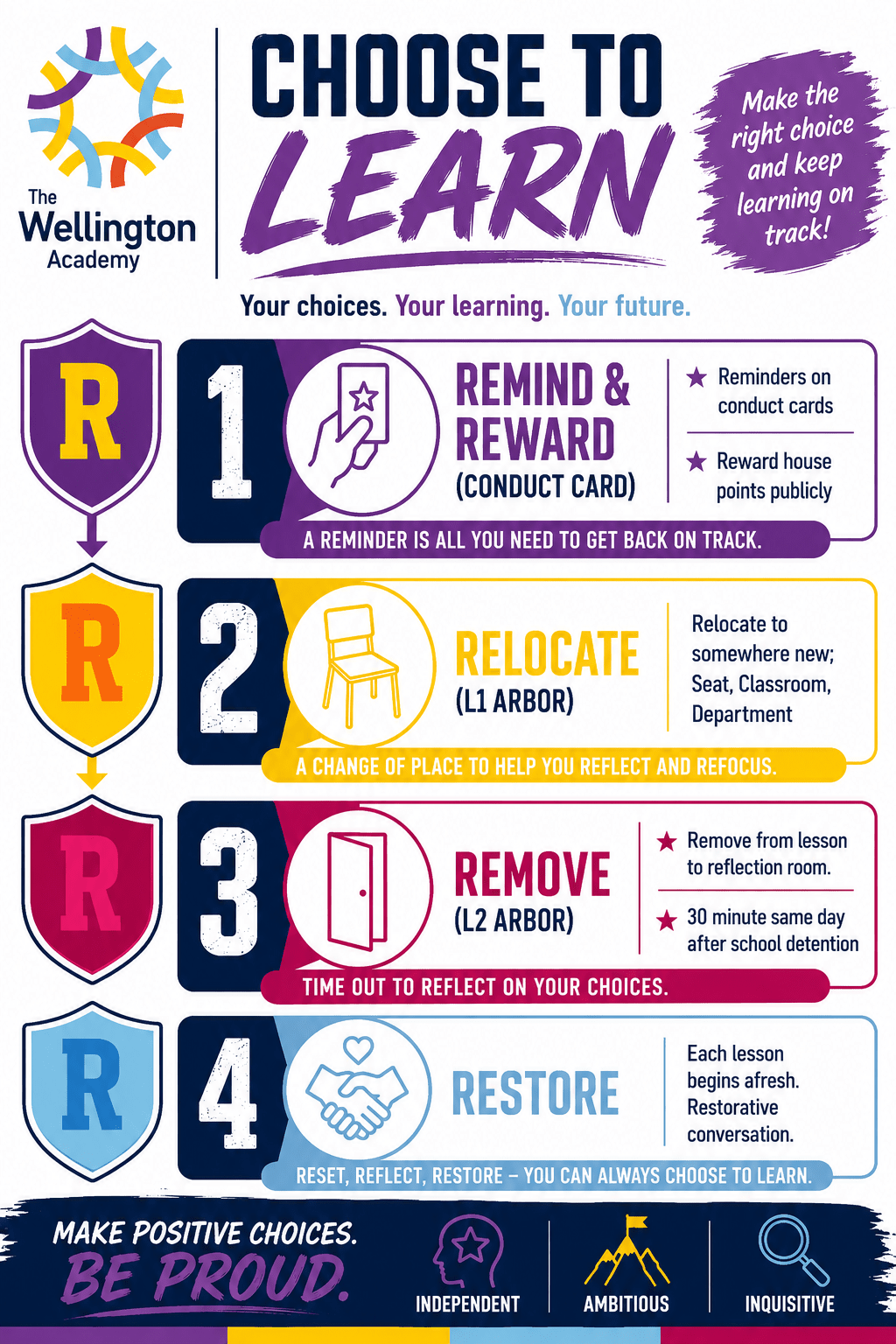
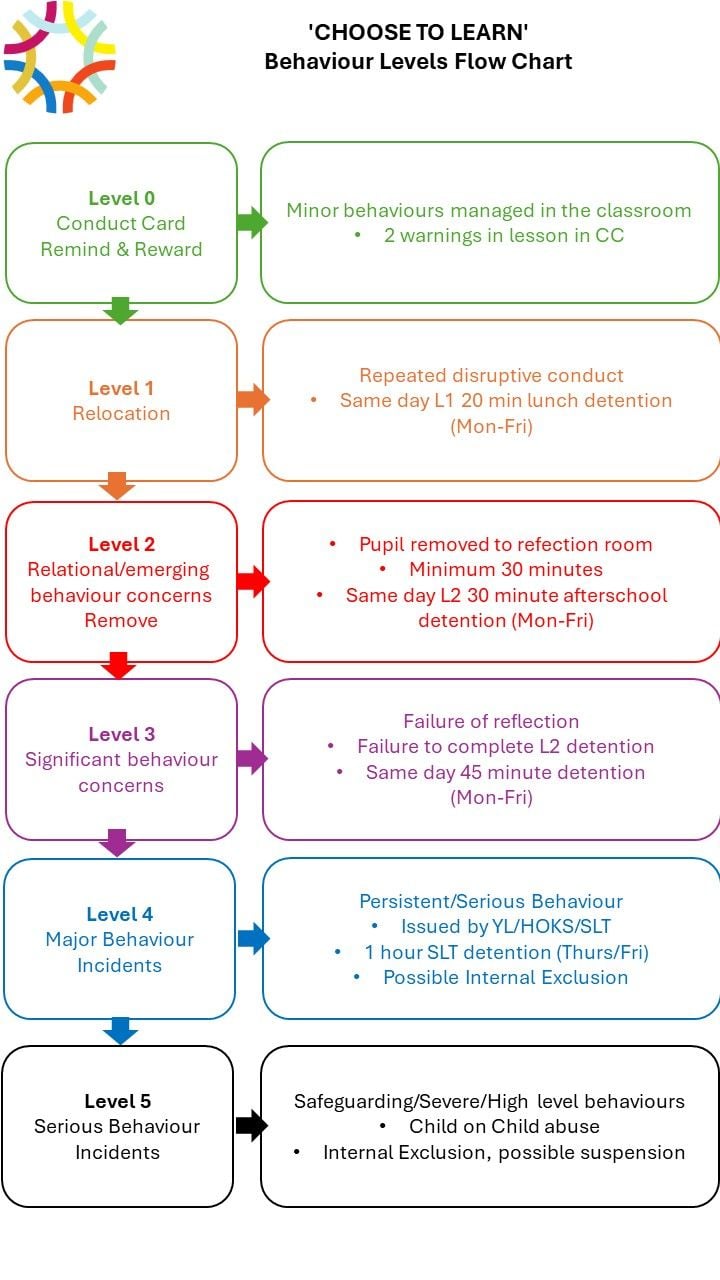
Our system for managing negative behaviour is based on an escalated consequence system which is clearly outlined in the Choose To Learn Behaviour for Learning ladder. If a student is disrupting learning, the teacher should initially speak to them and ask them to correct the behaviours and use the variety of strategies given in students pupil passports, behaviour support plans or TLAC to maintain a calm and orderly classroom. If the student continues, formal warnings can be issued, where a 1-1 conversation is had between the student and teacher and signing their conduct cards. Students can have 2 ‘reminders’ in a lesson.
Should a student need a further escalation, they are then ‘relocated’ to another location. A relocation can be to another location in your classroom, to another staff’s classroom, HOD classroom etc. This is decided in teams to support and prevent the student from loosing out on learning time.
Should a further escalation be required, students can then be ‘removed’ to go to Reflection Room to stay for the remainder of the lesson and social time. A minimum of 30 minutes is spent in reflection to allow students to de-escalate and reflect on their behaviour choices. Being sent to reflection during a lesson automatically triggers a text sent home and a same day detention after school. It is then the responsibility of the classroom teacher to contact home and discuss the behaviour displayed in the lesson which led to the relocation and removal from lessons and attend the detention the student has been set to have a restorative conversation. This communication and practice is imperative to the Choose to Learn strategy.
In addition to this, the Academy operates an on-call system for staff to use if they believe a student’s behaviour is unsafe or causing sufficient disruption to prevent any learning from taking place where a member of staff will attend to support if required.
The final part of our graduated response is the ‘restore’ where students receive a fresh start each time they return to your lesson following the restorative conversation you had with them in detention.